



Sellsy CRM: GOOD or BAD CRM? (Test & Review 2026)
TL;DR: Sellsy is a good all-in-one generalist, but not an excellent CRM specialist
🟢 What it does well: an all-in-one French platform (CRM, quotes, invoicing, purchasing, inventory) with useful automations, good French support and data hosted in France.
🟠 Where it falls short: a cluttered, sometimes slow interface, a basic CRM, unreliable progress billing, no real project management and AI that is mostly text generation.
💸 Pricing reality: with multiple modules and users you quickly pass 400 euros per month, which is steep for the actual value delivered.
✅ Who it fits: SMEs that want to centralize management with a French provider and accept complexity; if you mainly want to sell faster with a lightweight, AI-native CRM, a specialist like Breakcold does more for less.
My Opinion on Sellsy CRM
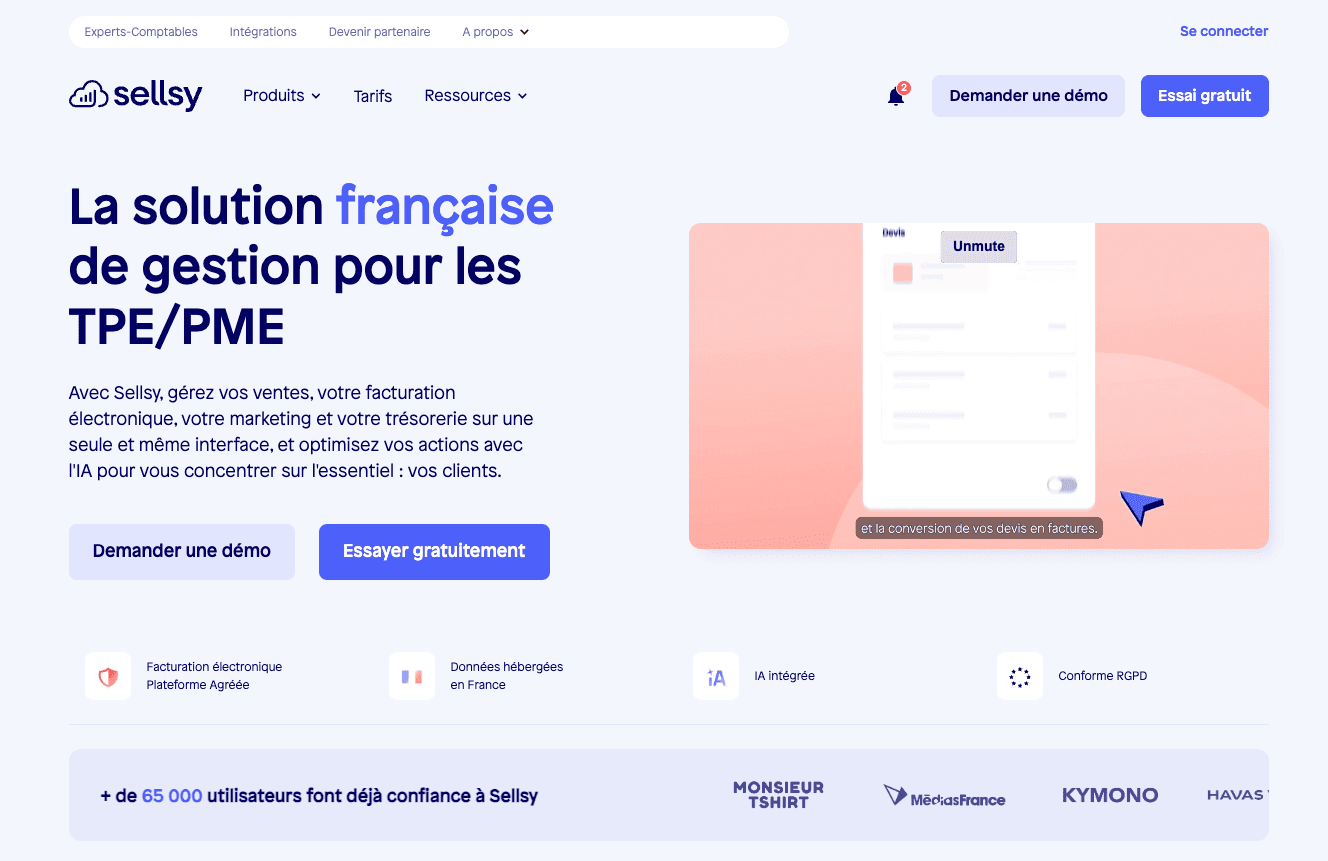
I spent several hours thoroughly testing Sellsy, a French business management and CRM software that promises to centralize all of a company’s needs into a single tool 🧩. CRM, quotes, invoicing, purchasing, inventory, cash flow, marketing, reporting… the promise is ambitious.
From the very first minutes on Sellsy, you understand its philosophy: to be an “all-in-one” solution for businesses. Like other ERPs or management suites, the tool aims to cover as many use cases as possible to prevent managers from multiplying subscriptions 📦.
On paper, it’s appealing.
Instead of having:
a CRM,
an invoicing tool,
a management software,
a cash flow module,
a marketing tool,
Sellsy offers everything in a single interface.
But this approach comes with a major risk: trying to do everything often means doing nothing perfectly. And unfortunately, that’s exactly what stands out after several hours of testing ⚠️.
In this article, I’m sharing a complete, no-BS review based on real usage. The goal: to clearly explain what Sellsy does well, what it does poorly, and most importantly, whether it’s worth its price.
PS: What frustrated me the most during this test was having to wait to be contacted by a sales team just to access the free trial.
Sellsy Suite CRM: GOOD or BAD CRM? (Test & Review) (Summary) |
|---|
Sellsy is a French “all-in-one” software that promises to centralize CRM, invoicing, cash flow, marketing, and management in a single platform 🧩. 📦 An ERP-style approach that looks appealing on paper… but risky in practice. ⚠️ Trying to do everything = doing nothing perfectly: Sellsy is decent at everything, excellent at nothing. 👍 Strengths Fairly accessible interface Complete solution (CRM + quotes + invoices + purchasing + inventory) Useful automations Good French-language support Data hosted in France 🇫🇷 👎 Major Weaknesses Sometimes confusing and outdated interface Heavy, slow navigation Limited trial + mandatory sales contact Unreliable progress billing No real project management AI is mostly a gimmick High price for the real value delivered 💸 High pricing: With multiple modules and users, you quickly exceed €400/month without getting a truly “premium” tool. 📄 Invoicing = major weak point: Down payments, progress billing, tracking… too complex and unreliable for service businesses. 🧠 Decent but basic CRM: Functional pipeline, but lacks smart automation and smooth workflows. 📊 Solid integrations: 70+ connectors (banks, accounting tools, sales tools, etc.) a real plus. 🤖 Disappointing AI: Mostly text generation, not intelligent automation like in modern CRMs. 🚀 French Alternatives Breakcold → For sales teams focused on selling and AI-driven automation Axonaut → For small businesses that want a simpler, more affordable all-in-one tool 🎯 Verdict Sellsy is well-suited for SMEs that want to centralize their management, accept complexity, and stick with a French provider. But if your goal is to: sell faster truly automate keep a lightweight CRM then specialized solutions do better… for less money. 👉 Sellsy is a “good generalist,” but not an excellent specialist. |
Pros and Cons of Sellsy
Like all CRMs, Sellsy has its advantages and disadvantages.
For a large part of these pros and cons, I’ve combined my own opinion with positive and negative feedback found on platforms like G2 and Capterra.
Pros
⭐ 1. Intuitive interface and easy onboarding (not my opinion)
Many users find Sellsy easy to use, with a clear and generally accessible interface, even for non-technical users.
📊 2. All-in-one solution (CRM + invoicing + marketing + cash flow)
Sellsy integrates multiple modules into a single platform, avoiding the need to juggle different tools: CRM, quotes/invoices, cash flow, marketing automation, etc.
🔄 3. Practical automations
The CRM offers automations (workflows, automatic follow-ups, opportunity creation after quotes, etc.) that save time on repetitive tasks.
💼 4. Strong sales management
Contact and opportunity tracking, pipelines, and well-integrated quotes/contracts to facilitate prospecting and sales management.
💡 5. Appreciated customer support
Several users mention responsive, helpful support, with training sessions and webinars to support onboarding.
📱 6. Online access and mobile app
As a 100% SaaS solution, it can be accessed from any internet-connected device, making it easier to work on the go.
🇫🇷 7. French solution with data hosted in France
For some European, especially French, companies, this is a plus in terms of GDPR compliance and data sovereignty.
Cons
Based mainly on user feedback from G2 and other review platforms (Capterra, independent tests):
1. Learning curve and lack of intuitiveness
Several users report that the software can be difficult to get started with. It sometimes takes several days to understand all the features, which is not ideal for fast-moving teams.
2. Navigation not always smooth / slightly outdated interface
In some user tests, navigation between modules (CRM, invoicing, projects) is considered unintuitive and requires time to get used to. The interface is sometimes perceived as outdated compared to more modern competitors.
3. No free plan / limited trials
Sellsy does not offer a long-term free plan (only a limited trial version), which makes it difficult to fully test the tool before committing.
4. Less advanced features than some competitors
Some comparative reviews on G2 show that Sellsy may lack certain advanced CRM features offered by more specialized tools, especially in terms of automation and highly specialized functions.
5. International support perceived as less effective
External reviews (not necessarily specific to G2, but from other software tests) indicate that customer support is good in French, but less efficient in English or for international teams.
6. Pricing and subscription structure
Some reviews (notably outside G2, on Capterra) criticize the subscription model when it requires an annual commitment after the trial period, which can create a feeling of being “trapped” if the software is not a good fit.
7. Isolated specific issues
A few users point out problems with certain integrations (e.g., contact or calendar synchronization) or specific features that do not work perfectly.
Sellsy Features and UI/UX
Now that we’ve reviewed a summary of the pros and cons, let’s focus on Sellsy’s features and its UI/UX.
Sellsy is divided into four modules: Sales, Invoicing, Cash Flow, and Marketing. We will focus on each of these, especially the most important sub-features.
A rich interface… but one that quickly feels cluttered
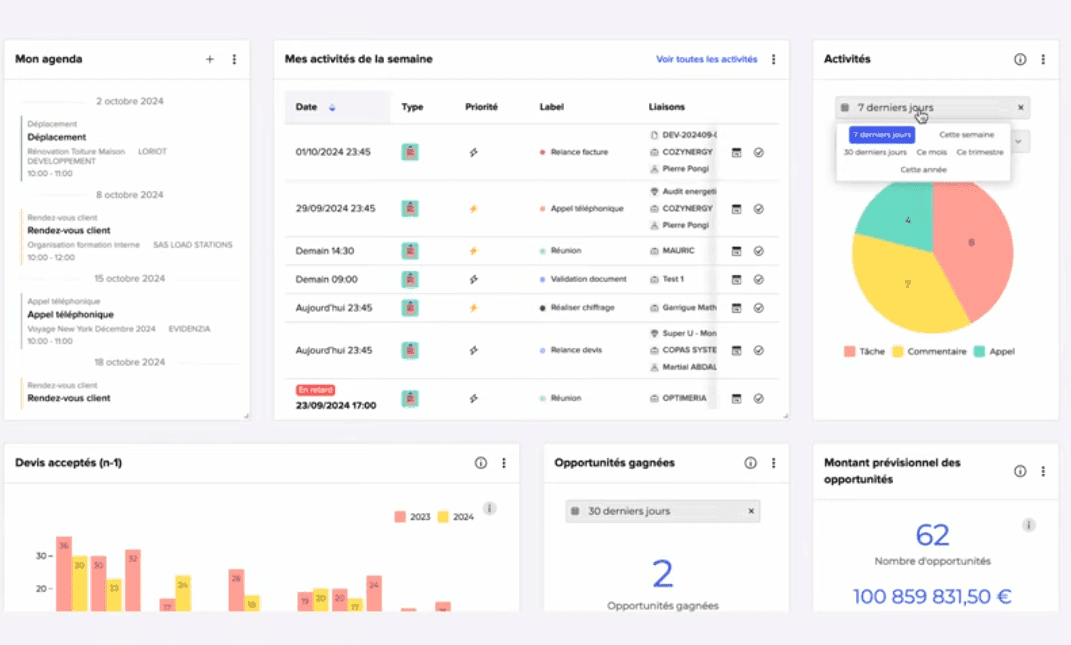
The homepage offers a customizable dashboard with “cards” (up to 15). You can display:
your activities,
your follow-ups,
your performance,
your key indicators.
It’s fairly well designed and customizable.
But very quickly, a problem appears: the multiplication of menus, sub-menus, modules, and shortcuts creates a constant feeling of overload. You feel drowned in features.
Instead of simplifying management, the tool ends up becoming confusing.
Navigation is often:
not very intuitive,
inconsistent,
sometimes slow,
poorly structured.
You spend too much time searching for information.
The CRM and Sales Pipeline: Decent
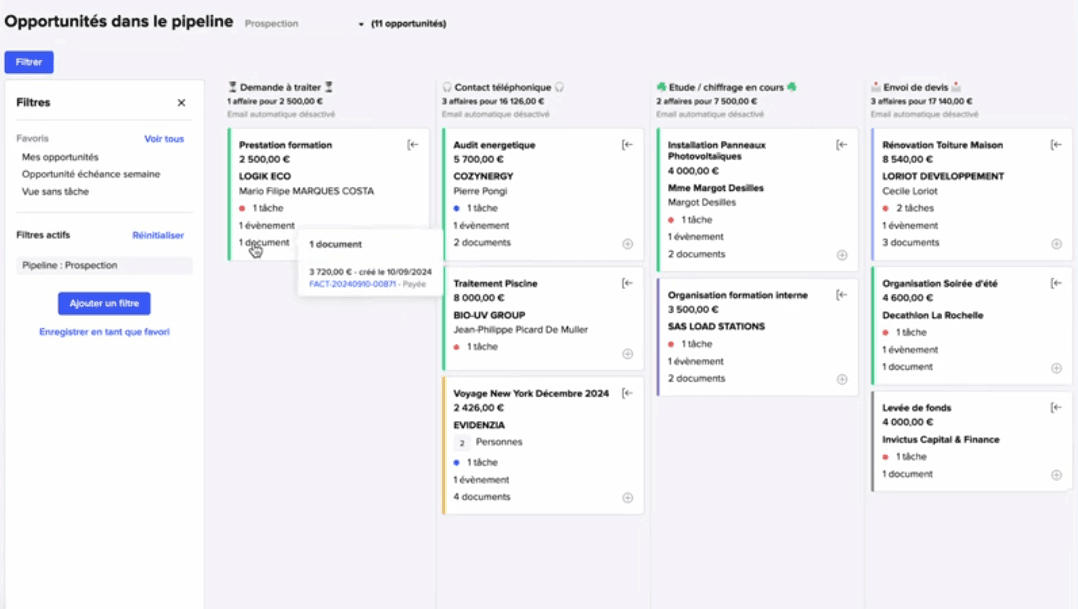
The “Opportunities” module corresponds to the CRM.
You’ll find:
a sales pipeline,
customizable stages,
draggable opportunities,
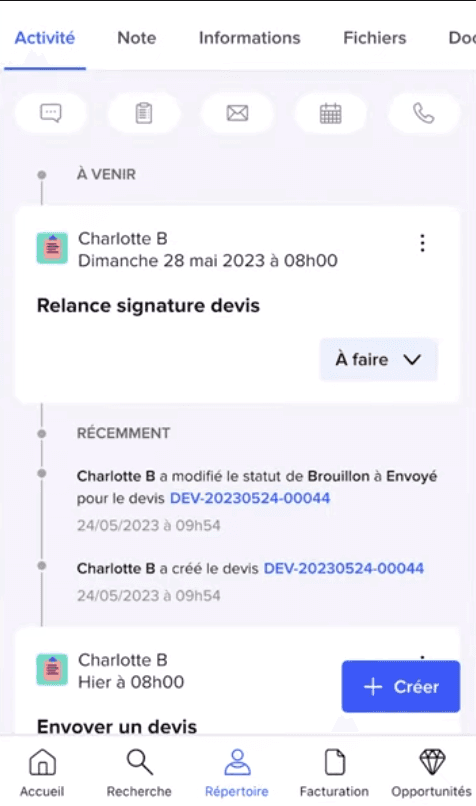
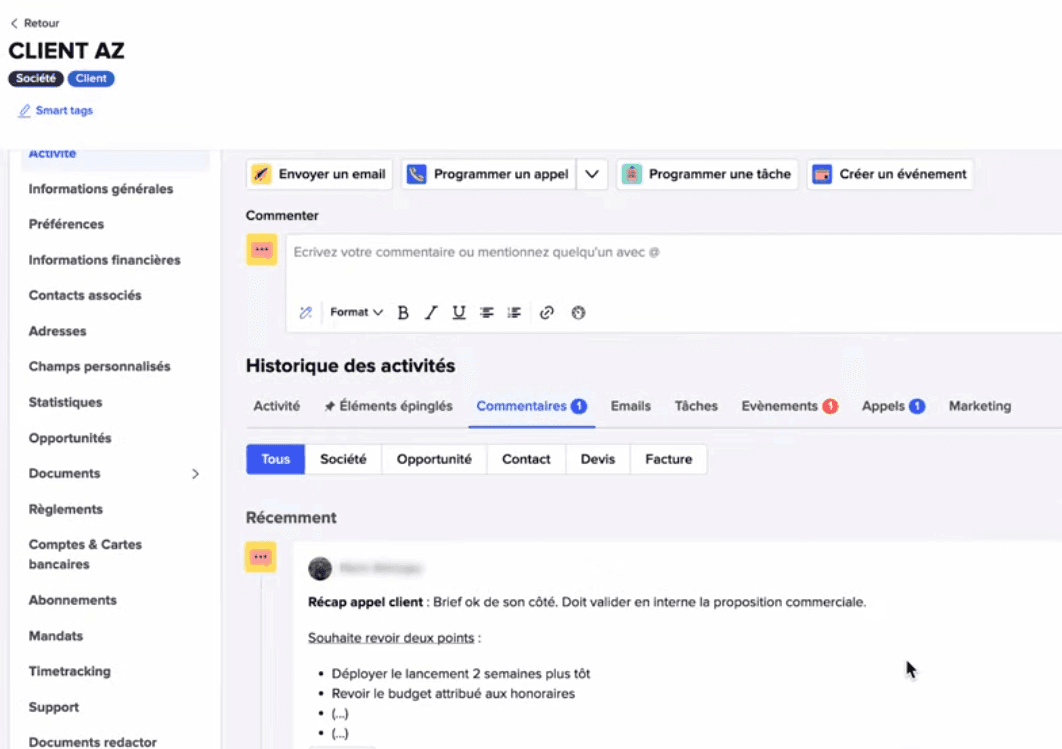
activity history (emails, tasks, comments).
It’s a classic CRM that does the bare minimum expected, while specialized CRMs go much further.
The issue isn’t that it’s bad, but that it’s never excellent. The ergonomics are sometimes awkward, some actions require too many steps, and the overall experience lacks fluidity.
Another frustrating point: the links between quotes, opportunities, and statuses are poorly automated. For example, an accepted quote does not automatically move an opportunity to “won.” You have to do it manually.
These are small details, but when combined, they become tiring over time.
Quotes and Invoicing: A Major Weakness
This is where Sellsy can be disappointing.
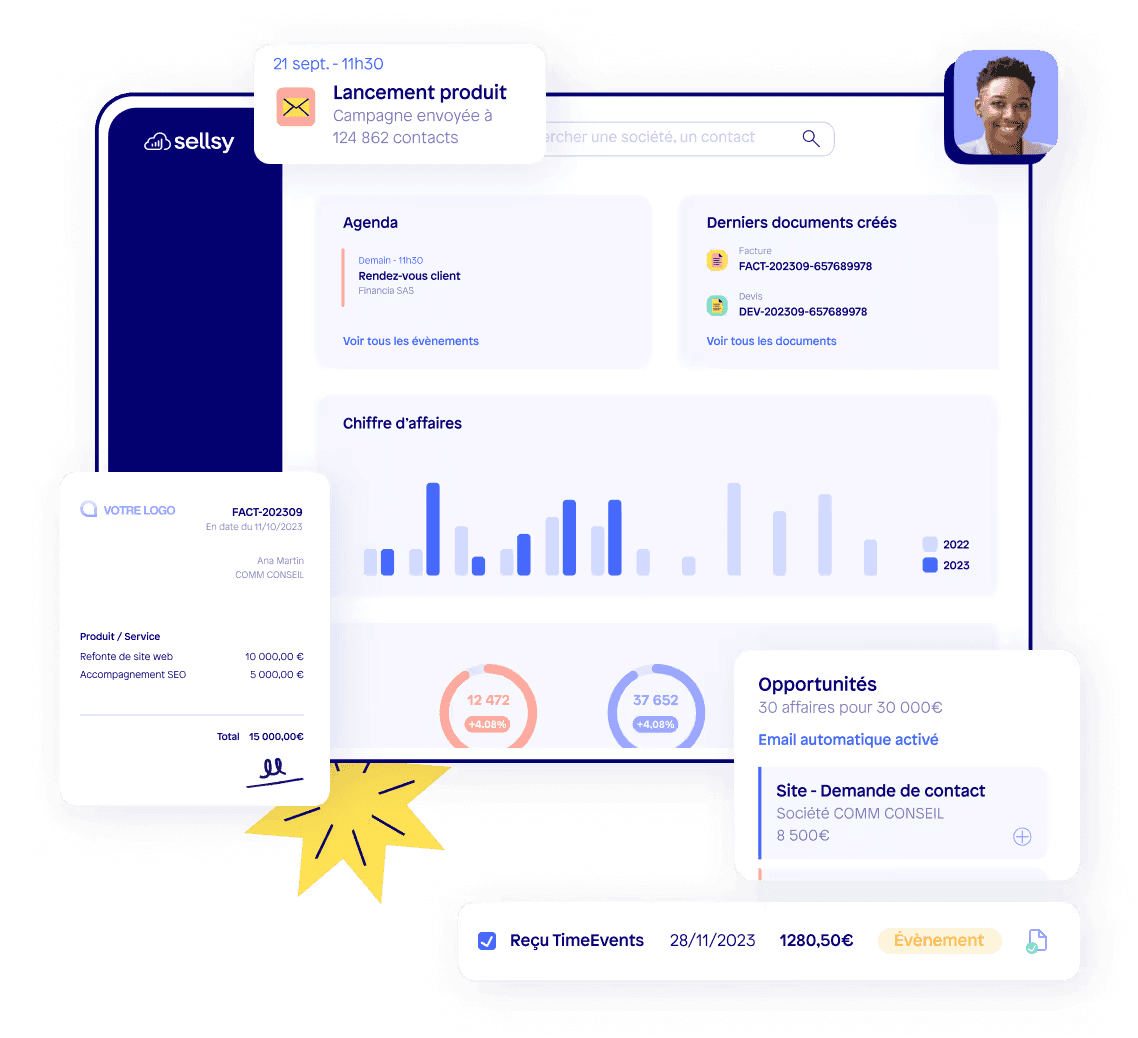
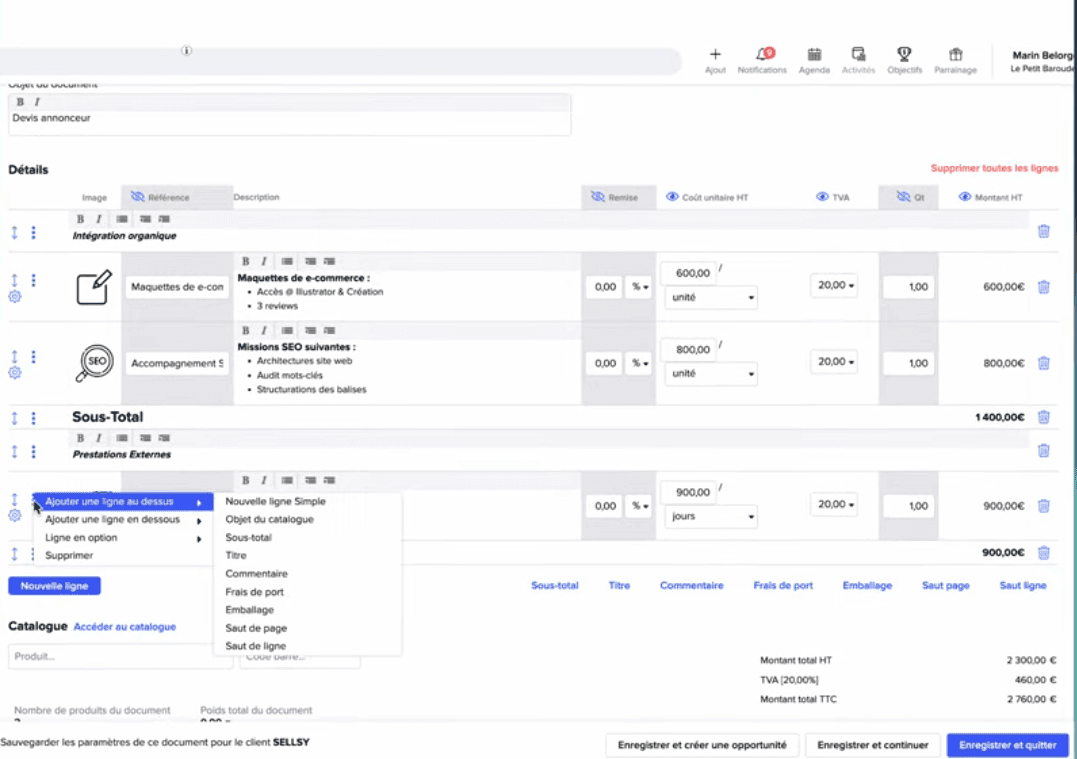
Quote Creation
Creating quotes is simple:
manual entry,
product catalog,
quantities,
pricing,
integrated electronic signature.
On paper, everything is there.
The electronic signature is a real plus.
Down Payment Management
You can create down payment invoices (e.g., 30%).
But very quickly, you realize that:
draft invoices are hard to find,
they are not centralized,
you often have to go back through the quote.
It’s unnecessarily complex.
Progress Billing: Almost Unusable
This is one of Sellsy’s biggest problems.
Progress billing is supposed to let you invoice a project gradually (20%, 30%, etc.).
In practice:
calculations are poorly handled,
down payments are badly allocated,
you sometimes end up with negative amounts,
down payment refunds are inconsistent.
As a result, this module is not reliable for serious project management.
For service, consulting, construction, engineering, or agency businesses, this is a deal-breaker.
Purchasing and “Back-to-Back” Sales: A Real Strength
Sellsy offers an interesting feature: the ability to generate purchases from sales.
In practice:
you create a quote,
you invoice your client,
then automatically generate a supplier purchase order.
This is very useful for:
subcontracting,
complex projects,
service reselling.
This module is well designed and fairly rare at this price point. It’s clearly a strong advantage.
Lack of True Project/Case Management
Another major weakness: the absence of a real “case” or “project” management module.
In a well-designed tool, you should be able to centralize:
quotes,
invoices,
down payments,
purchases,
time tracking,
margins,
profitability,
amendments,
additional work.
In Sellsy, this isn’t really possible.
Information is scattered across:
opportunities,
quotes,
invoices,
secondary modules.
There is no clear, unified overview.
It’s impossible to properly analyze the profitability of a complex project.
Inventory Management: Ultimately Quite Decent
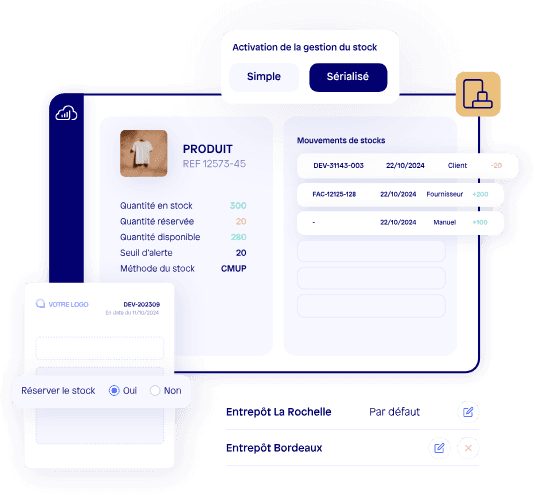
At first, the inventory module seems missing or hidden. In reality, you need to activate it.
Once enabled, you get:
threshold alerts,
replenishment,
valuation,
warehouse tracking.
Inventory management is fairly robust, even though it takes time to master.
It’s a strong point, as long as you’re willing to accept the complexity.
Cash Flow and Accounting: Too Fragmented
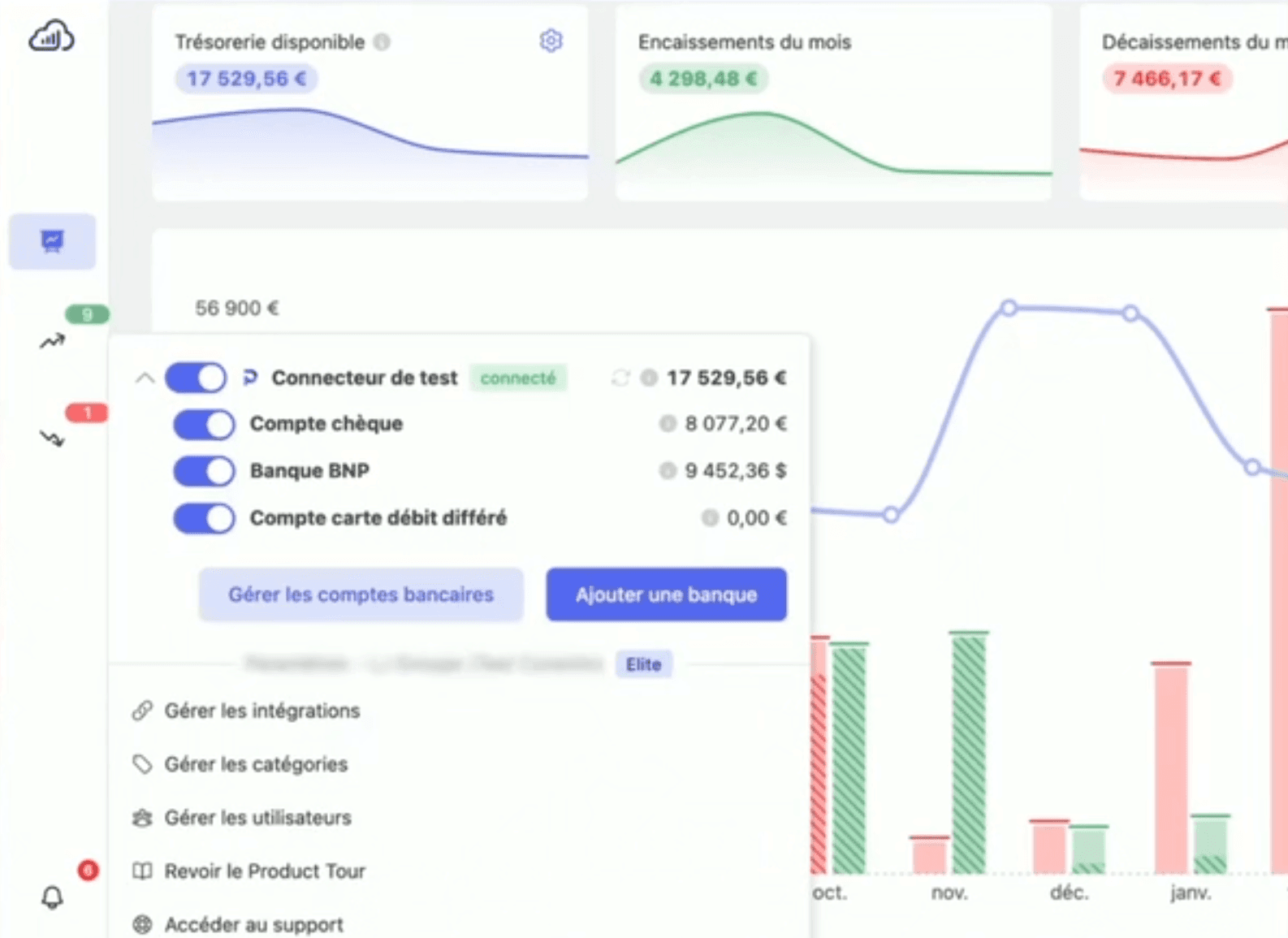
Cash flow is handled through a separate module.
You’ll find:
incoming payments,
outgoing payments,
cash position,
budgets.
But this module is basic and, above all, requires an additional paid subscription.
The same goes for accounting: Sellsy mainly offers pre-accounting features. You will still need to work with an accountant.
Marketing, AI, Reporting: More Gadgets Than Essentials
Sellsy includes:
a marketing module,
an assisted writing module,
reports,
time tracking.
But honestly, these modules are secondary.
Before adding AI or reporting features, Sellsy should first deliver flawless sales management. That’s not yet the case.
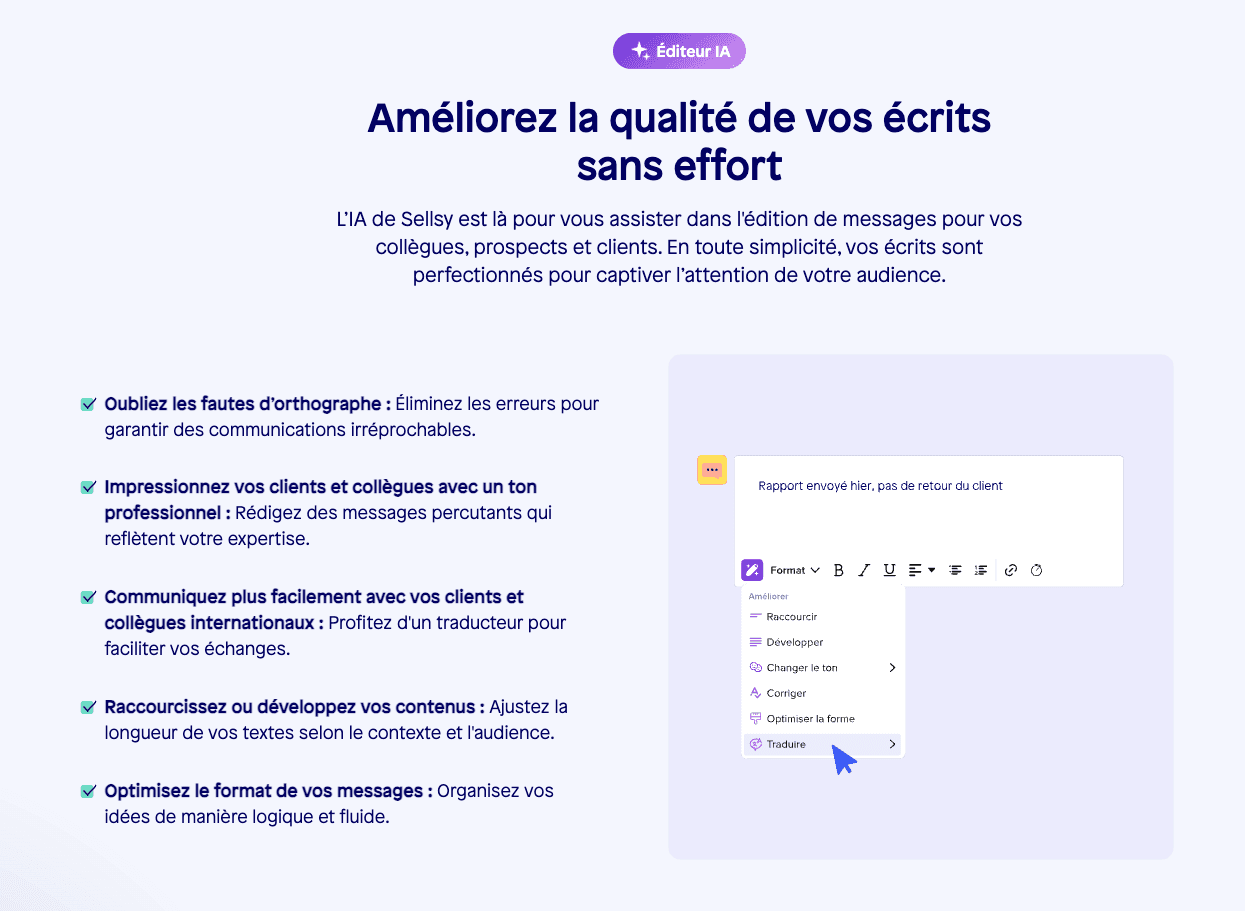
These features mostly give the impression of being stacked on top of each other.
In another article, I talked about traditional CRMs that add gimmicky AI features just to claim they are “AI-powered.” Sellsy is a perfect example of this: it’s mostly generative AI, with nothing that natively moves leads in the CRM, automatically creates deals, or dynamically creates tasks like Breakcold does, for example.
Integrations
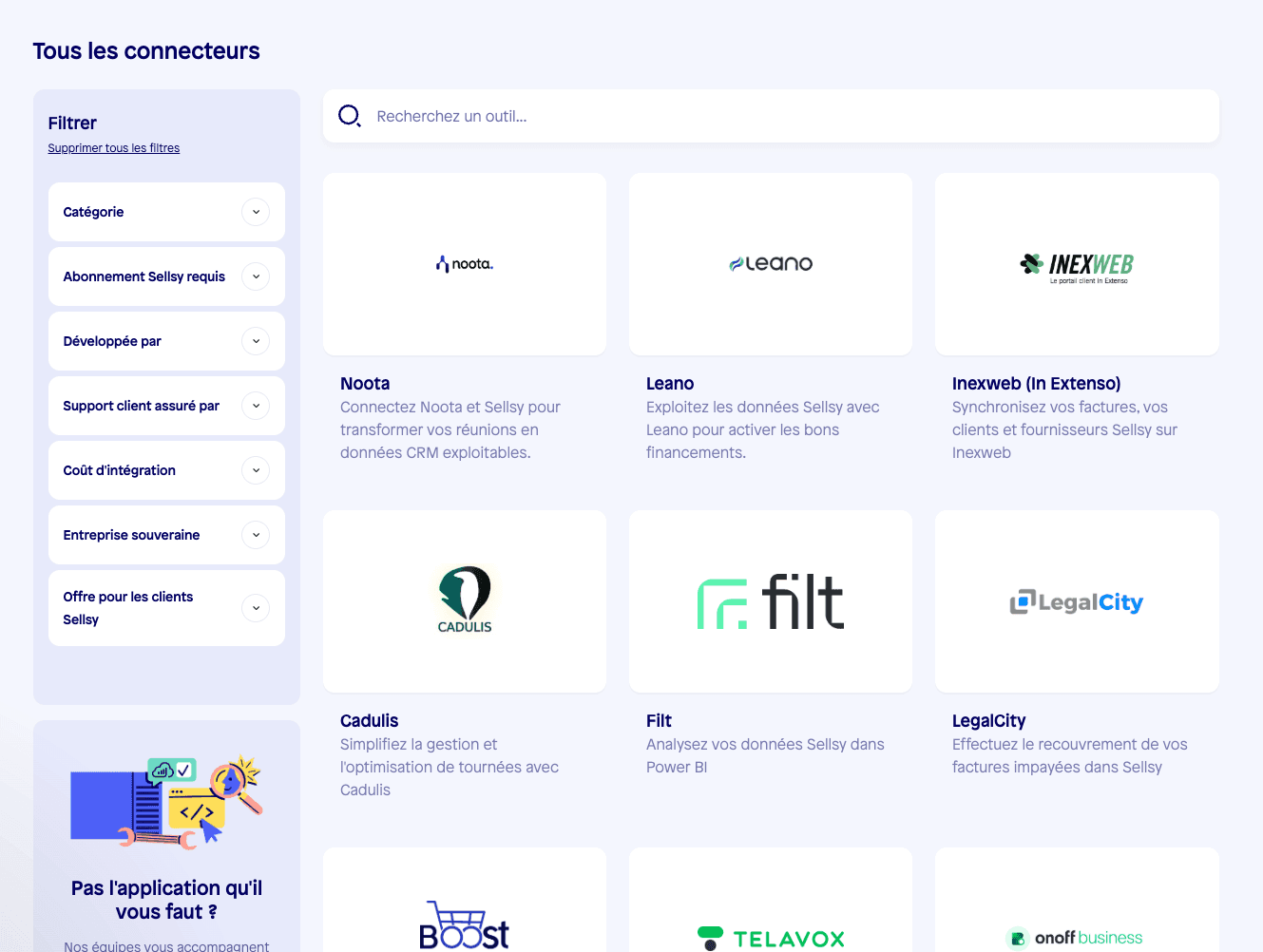
When it comes to integrations, there’s really nothing to complain about, they’re very comprehensive.
Roughly speaking, Sellsy offers more than 70 native integrations on its marketplace, including recent tools like Noota Notetaker, for example.
There are many integrations focused on accounting and invoicing, which also highlights that Sellsy is not fully optimized in these areas within its own offering.
Being able to connect your professional bank account is, in my view, a major plus.
Sellsy Pricing
Pricing: Sellsy’s Real Problem
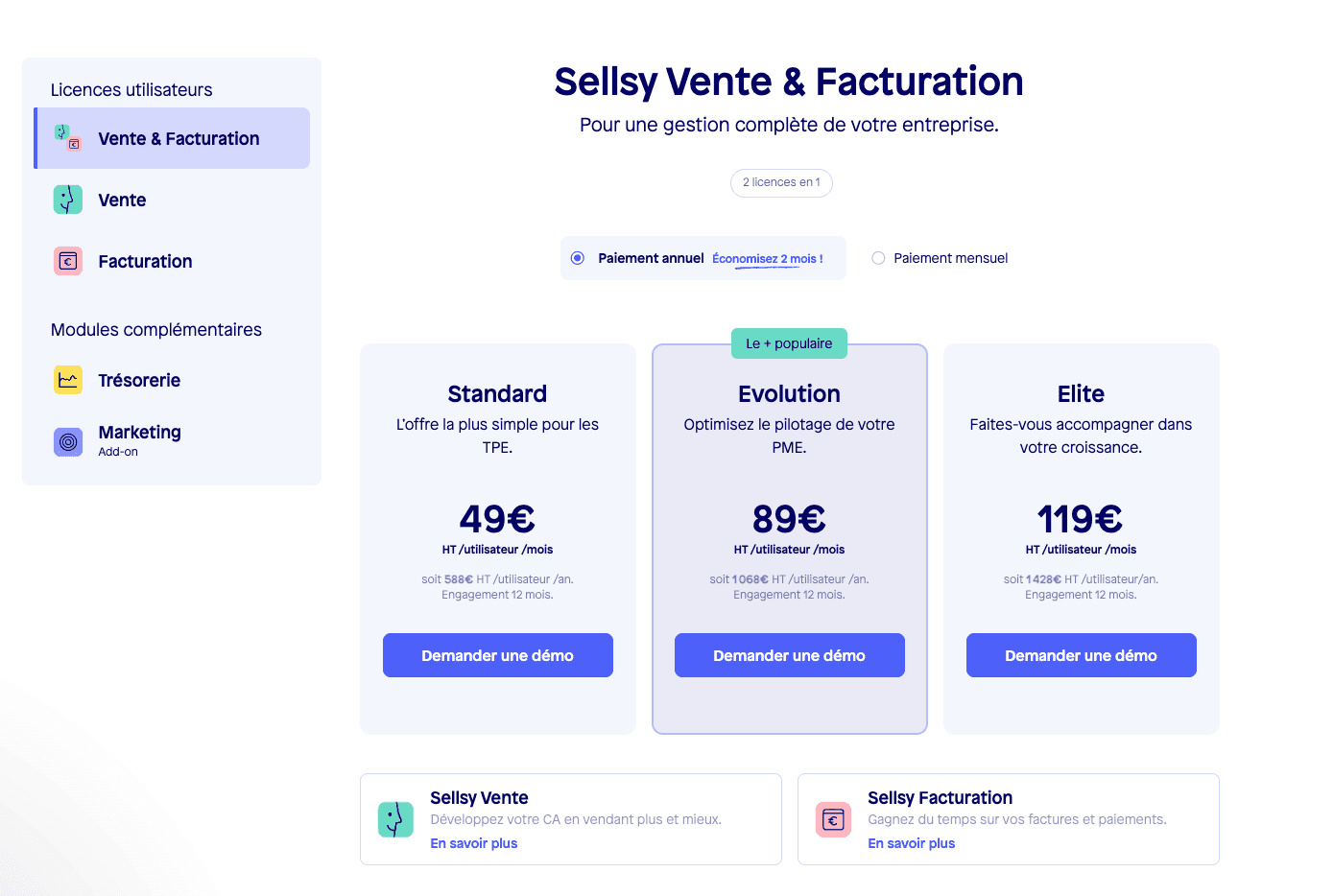
This is where things really fall apart. First, you need a minimum of 2 users according to the pricing page. Each module (there are 4) costs between €29 and €99 per month per user.
For a “standard” use case (CRM + invoicing + cash flow) with 4 users, you quickly reach:
👉 Around €400 to €550 per month.
And that’s without very advanced modules.
At that price point, you’re entitled to expect:
full project/case management,
flawless invoicing,
exemplary ergonomics,
total centralization.
But that’s not the reality.
The price is consistent with the promise… but not with the actual product. To be fair, a full tech stack would cost about the same. But in that case, why pay only for Sellsy’s Sales module if it’s not a “killer” CRM, when you can choose more specialized solutions?
French Alternatives to Sellsy CRM
If you’re using Sellsy, it’s probably because you want a French CRM, in French, with high-quality French support.
Here are some alternatives to Sellsy based on those criteria.
Breakcold: the French specialized alternative to Sellsy
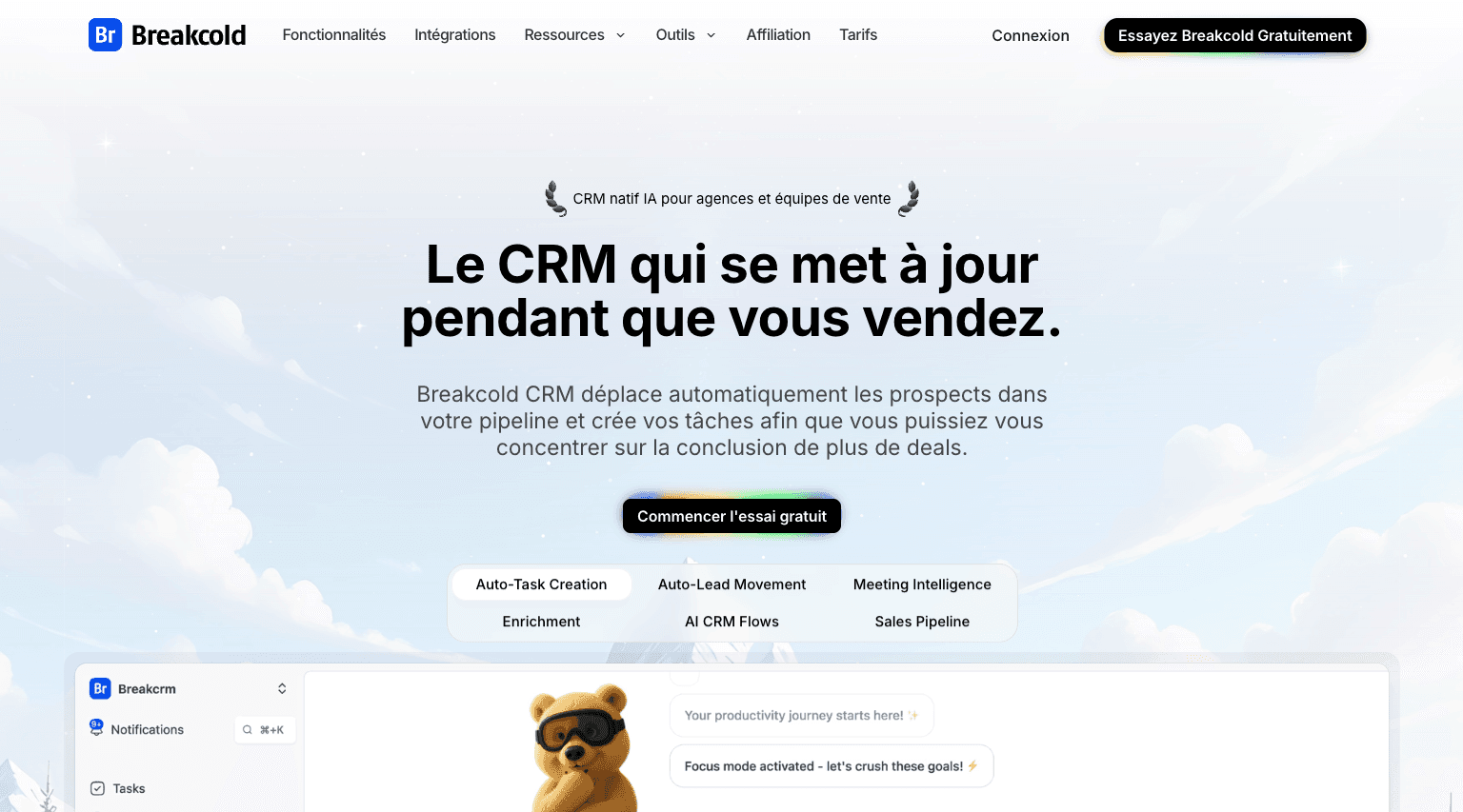
Unlike Sellsy, Breakcold has chosen to specialize in the sales side.
Breakcold is a Sales CRM that allows you to automatically sync your email, phone, meeting, LinkedIn, WhatsApp, and Telegram activities.
The CRM is also AI-native, which means you don’t have to waste countless hours updating your CRM manually, as is often the case with Sellsy.
Breakcold is also inexpensive compared to Sellsy, with its most popular plan priced at $99/month per user.
A team of 5 on Breakcold is $139/mo, where Attio, Pipedrive and HubSpot Sales Hub run about $500/mo for 5 seats with similar features.
Other Key Features of Breakcold AI Native CRM |
|---|
Auto-lead movement: Leads move automatically in Breakcold’s CRM based on your interactions with them. No setup required, the AI understands everything on its own. Auto-task creation: Monitors your interactions with leads and automatically creates follow-up tasks so you never lose momentum. This lets you focus on chatting with leads, not on admin work. Vision Builder – by default, leads move automatically by how you named your lists and sales pipeline stages (zero setup). But if you want to control the AI, you can by using natural language to build advanced AI CRM workflows. AI-Powered CRM Dashboard – A self-updating dashboard that highlights your most important tasks so you always know what to focus on. AI Contact Management – Automatically organizes leads into the right lists and groups by analyzing your conversations, notes, and activities. AI Personalities (AI Agents) – Choose an AI personality aligned with your business goals. Your dashboard then adapts, serving you daily tasks tailored to that persona. AI Reasoning – Every suggested task comes with context, so you’ll know exactly why it’s important and why it matters today. AI-Suggested Messages – Get personalized next-message suggestions that match both your tone of voice and your AI personality. Works for email & social conversations. AI Rules – Add rules to each step of your workflow for deeper customization and smarter automation. AI-Powered Contact Deduplication – Automatically identifies and merges duplicate contacts, eliminating hours of manual data cleanup and keeping your CRM lean and accurate. Advanced Data Enrichment – Powered by BetterContact, Breakcold now uses waterfall enrichment to surface verified B2B emails and phone numbers, enhancing the quality and precision of your outreach. AI Notetaker – Breakcold has its owner AI Notetaker but also integrates with tools like Otter, Fireflies, TL;DV, and Fathom to auto-generate and log call summaries directly into the CRM — complete with transcript links and follow-up tasks based on what was discussed. All-in-One Unified Inbox – Manage conversations from LinkedIn, email, WhatsApp, and Telegram in one place, so you can respond faster and never miss a follow-up. Social Engagement Stream – Like, comment, and engage with your leads’ posts without leaving the CRM — build relationships through meaningful and consistent interactions. 20+ native integrations: including Slack, Apollo, Smartlead, Instantly, Lemlist & many other sales tools. |
Axonaut: the French all-in-one alternative to Sellsy?
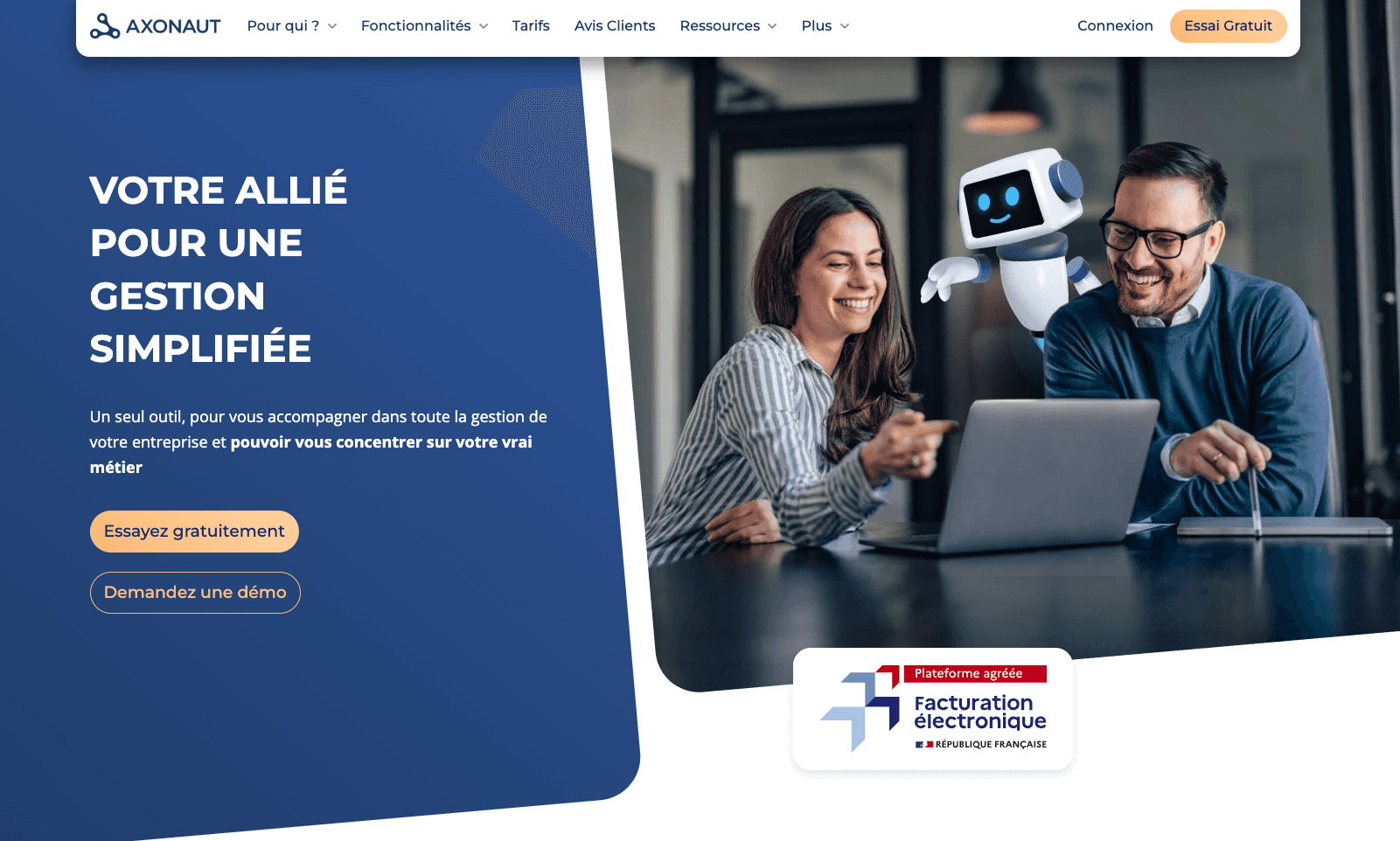
Axonaut, like Sellsy, is a management suite + CRM designed for French small and medium-sized businesses.
Axonaut is a simpler, more pleasant, and more affordable version of Sellsy.
Of course, the tool is not as comprehensive, but it gets the job done: sales management, quotes, invoicing, and expense/purchase management.
Axonaut starts at €69 per month, but additional users benefit from decreasing pricing. For a team of 5 people, the cost is closer to €189 per month.
The Future of Sellsy
Sellsy was recently acquired by the Italian group TeamSystem, likely for around €200 million or more, given its 2024 revenue and probably strong customer retention.
There are now two possible scenarios:
Either Sellsy continues to innovate under the TeamSystem umbrella,
Or TeamSystem focuses on acquiring larger clients and expanding Sellsy internationally, concentrating on distribution rather than improving the product.
Only time will tell.
Frequently asked questions

Written by
Arnaud Belinga · Co-Founder & CEO at Breakcold
Arnaud is the Co-Founder & CEO of Breakcold, the AI Native CRM for sales teams of 5 to 30+ people.