



CRM Integration with Telegram: Best Options in 2026
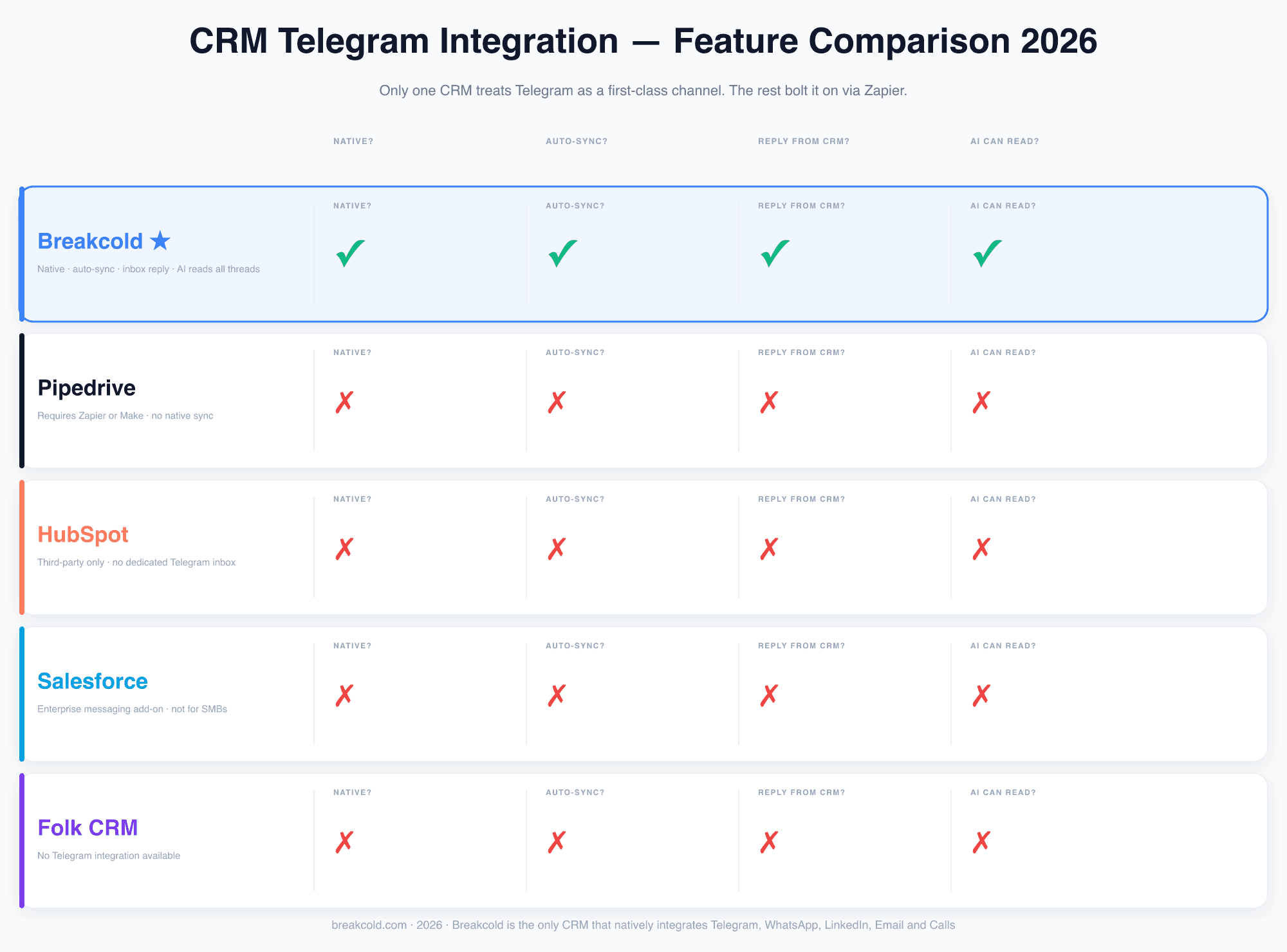
Most CRMs bolt Telegram on via Zapier. Breakcold is the only sales CRM where Telegram is a first-class native channel — auto-sync, inbox reply, Chrome extension import, and AI that can actually read your deal threads.
TL;DR: the only CRM with a truly native Telegram integration in 2026 🏆
🏆 Breakcold: the AI Native CRM for sales teams of 5 to 30+ people. AI agents handle the admin (move deals, log activity, create tasks), it connects to Claude and ChatGPT via native MCP, and it syncs LinkedIn, email, WhatsApp and Telegram into one pipeline. At 5 seats Breakcold is $139/mo, where a traditional CRM runs $300 to $500/mo. It is the only CRM here where Telegram auto-syncs with no Zapier.
🟢 Native vs glue: native means conversations auto-sync, you reply from the CRM inbox, and AI can read the full thread. Third-party glue is one-way and breaks when the API changes.
🔵 Pipedrive and HubSpot: Telegram only via Zapier or Make, one-way, with no way to reply from the CRM and nothing for an AI agent to read.
🟣 Salesforce: Telegram exists but as an enterprise messaging add-on, overkill and overpriced for a 5 to 30 person sales team.
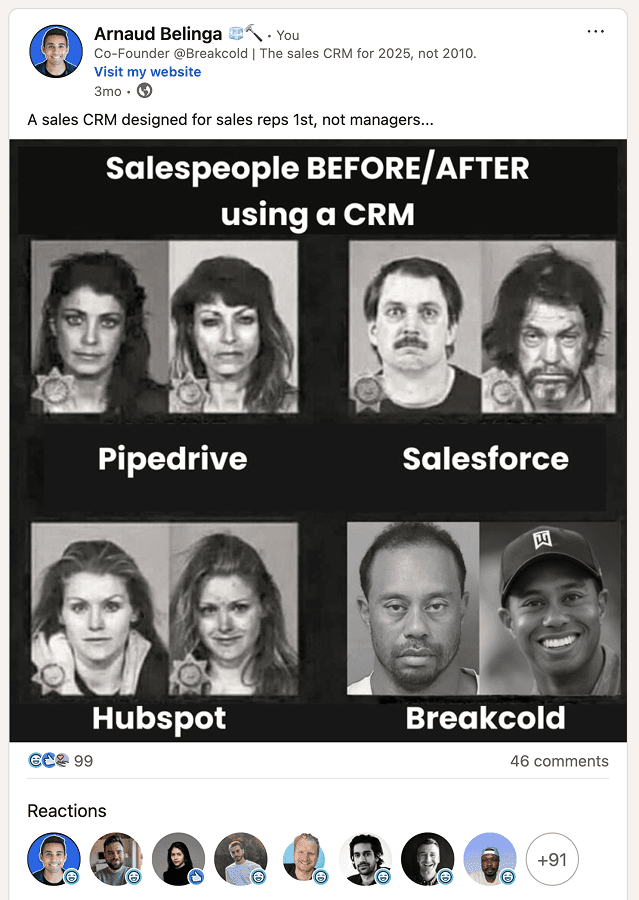
🟠 Folk: no Telegram integration at all as of 2026, and even LinkedIn requires manual syncing.
Telegram crossed 1 billion monthly active users in 2024 and it never stopped growing. In certain markets: Eastern Europe, the Middle East, Latin America, crypto, fintech, anything where WhatsApp is not dominant, Telegram is where deals happen. Not email. Not LinkedIn DMs. Telegram.
If you're a sales team chasing prospects on Telegram and logging those conversations manually into a CRM, you already feel the pain: copy-paste threads, forgotten follow-ups, no history when a rep leaves. The good news is that some CRMs now solve this, but "some" really means one.
This guide covers the five most common CRMs that people ask about for Telegram integration, explains the key architecture difference that separates them, and shows you what a real native Telegram CRM looks like in practice.
\
Native vs third-party: the architecture that changes everything
Before you evaluate any CRM for Telegram, you need to understand one distinction: native integration vs third-party glue.
Third-party glue means the CRM doesn't actually touch Telegram. You connect the two using a middleware tool like Zapier or Make. A message comes in, Zapier fires a webhook, a note appears in your CRM. It works, barely. But it only captures what you configure it to capture, it breaks when Telegram's API changes, and it never gives the CRM enough context to actually understand the conversation.
Native integration means the CRM connects to Telegram directly. Conversations auto-sync without any Zapier workflow. You can read and reply to Telegram messages from inside the CRM inbox. And when you connect an AI agent via MCP, Claude, or any other tool, the AI can actually read the full Telegram thread, not just a webhook payload.
The difference sounds technical. The outcome is practical: with native integration, you stop context-switching. With glue, you just add another thing to maintain.
1. Breakcold: the Only Native Telegram CRM for Sales Teams
Breakcold is an AI-native sales CRM that treats Telegram the same way it treats email: as a first-class conversation channel that the CRM should own, not outsource. It's the only CRM on this list where Telegram is wired in directly: no Zapier, no Make, no middleware.
Here's what "native" means in practice for Breakcold:
Auto-sync conversations. Once you connect your Telegram account, every DM and group chat from your prospects automatically syncs to their CRM record. You don't configure anything. It just appears.
Reply from the CRM inbox. Breakcold has a unified multichannel inbox that surfaces Telegram messages alongside your emails, LinkedIn DMs and WhatsApp threads. You reply to Telegram without leaving the CRM.
Import contacts via Chrome Extension. When you find a prospect on Telegram, the Breakcold Chrome Extension lets you pull them directly into the CRM with one click: name, username, conversation history.
AI reads your Telegram threads. Because Telegram conversations are stored natively in Breakcold, an AI agent connected via the Breakcold MCP can read those threads. You can ask Claude "is this deal at the right pipeline stage based on my Telegram conversations?" and actually get a meaningful answer.
Link Telegram conversations to any record. One prospect on multiple Telegram accounts? You can link threads from different channels to a single contact or deal, keeping the full picture in one place.
Breakcold natively integrates with email (Gmail, Outlook), LinkedIn, WhatsApp, Telegram, calls and meetings, all from a single plan. To our knowledge, it's the only sales CRM doing this. You don't need Surfe, Linkport or any other plugin to get the sync working.
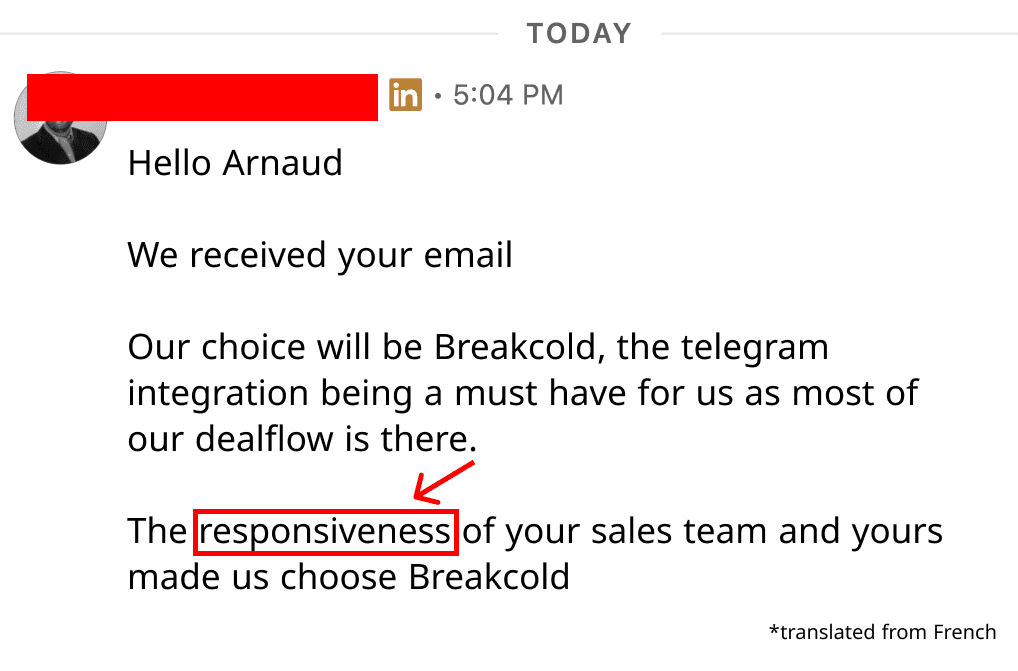
Breakcold is built for teams of 5 to 30 people: startups, agencies, consultants, anyone with a real sales motion on modern channels. It starts at $99/mo for one seat and two connected accounts, with additional seats at $10/mo each. Telegram and WhatsApp are included in that base price, not sold as add-ons. A team of 5 on Breakcold is $139/mo, where Attio, Pipedrive and HubSpot Sales Hub run about $500/mo for 5 seats with similar features.
If Telegram is part of your actual sales workflow, Breakcold is the clear answer. If you want to compare it against WhatsApp-first teams, check out the CRM integration with WhatsApp guide: the architecture is the same.
2. Pipedrive: Telegram via Third-Party Only
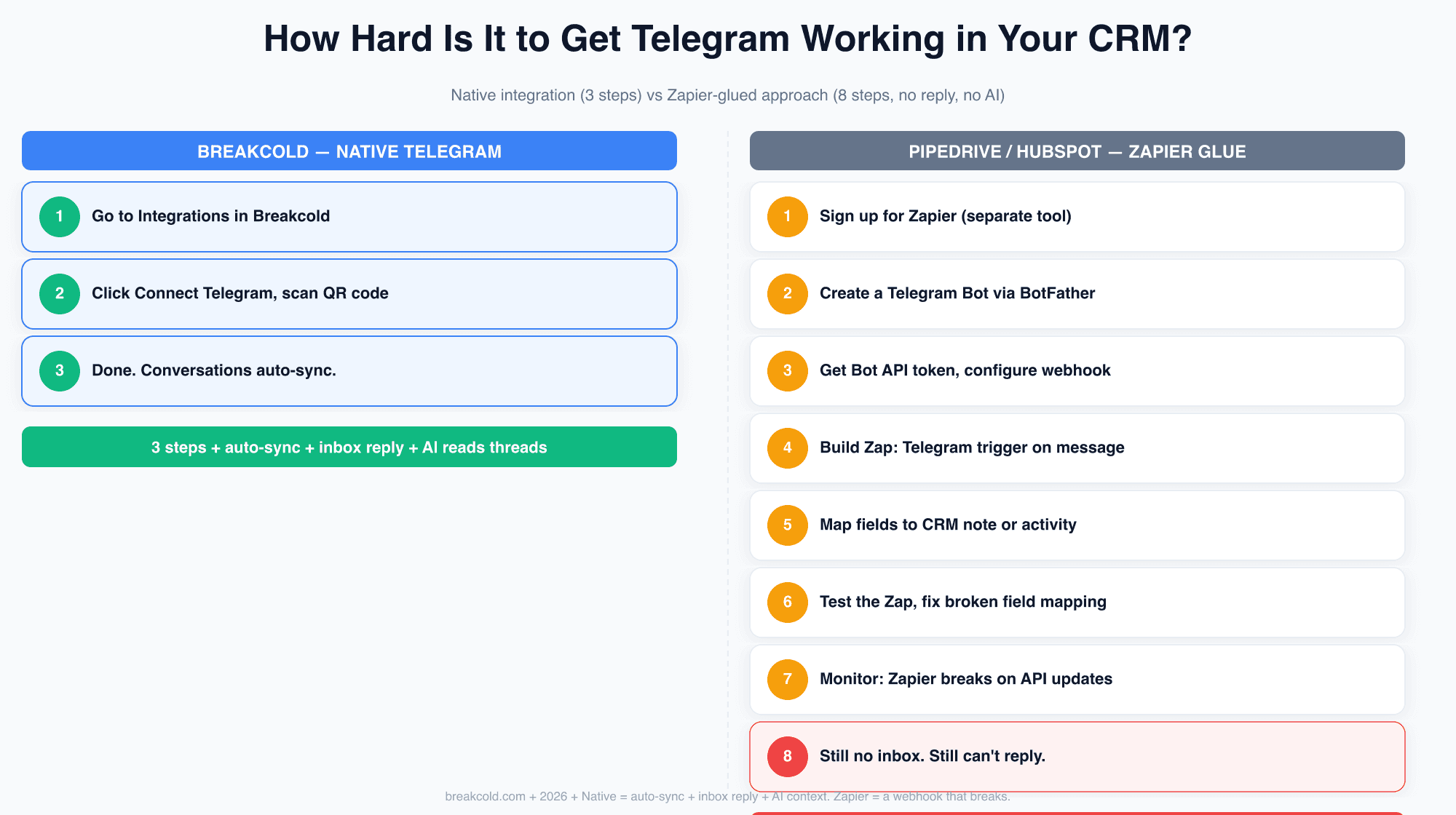
Pipedrive is one of the most popular SMB CRMs and it has zero native Telegram support. To get Telegram conversations into Pipedrive, you need to build a Zapier or Make automation that listens for incoming Telegram messages and pushes a note or activity to the corresponding deal. It works for simple setups but it has real limitations.
First, you only get what you configure. If your Zapier zap logs "new Telegram message received" but doesn't capture the thread context or the contact details, your CRM record is useless for following up. Second, you can't reply to Telegram from Pipedrive: the sync is one-way. Third, there's no AI layer that can read Telegram context: Pipedrive doesn't have an MCP server, so even if you tried to connect Claude to Pipedrive, the Telegram threads wouldn't be in scope.
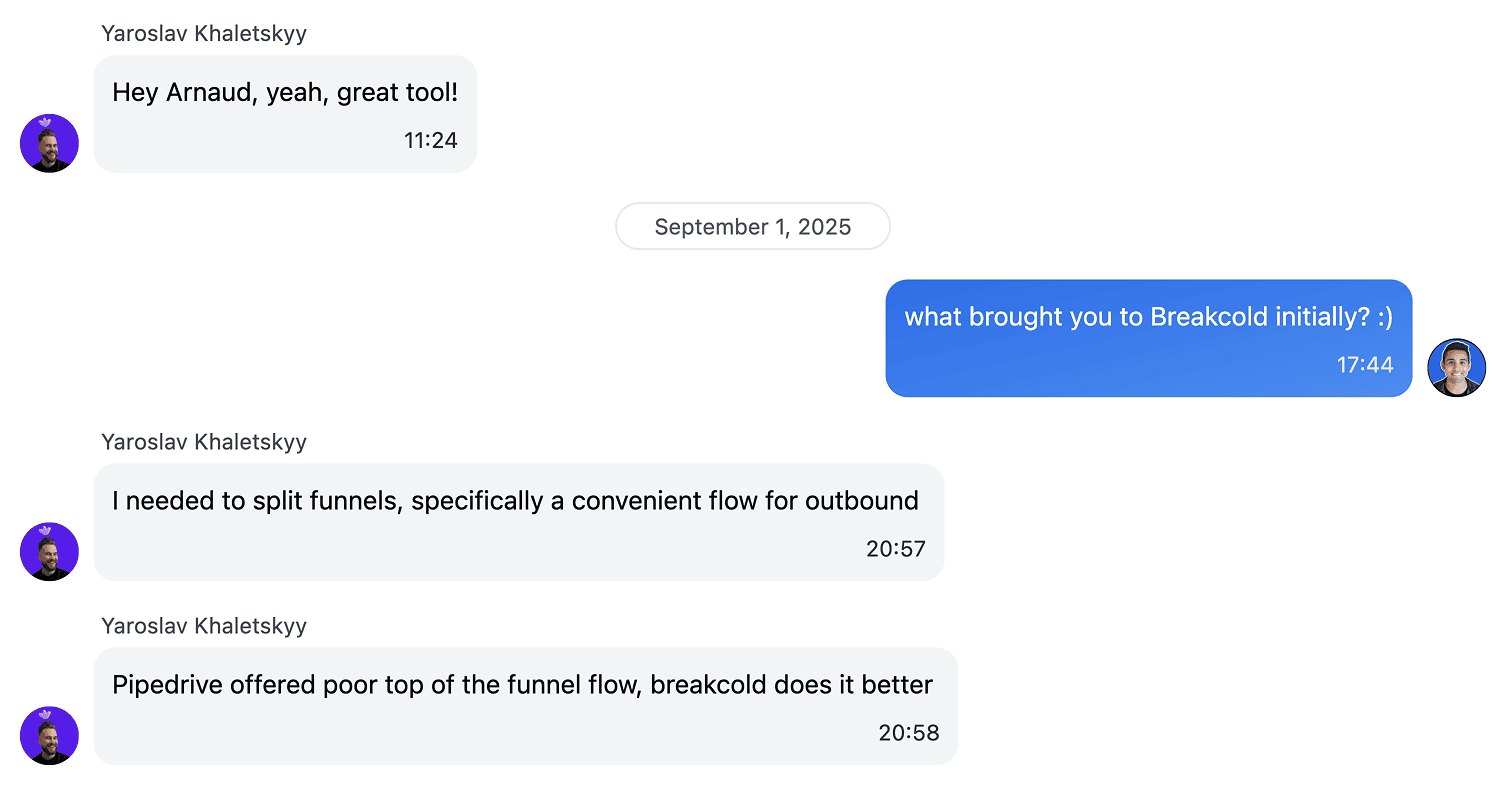
Pipedrive was a genuinely great CRM for SMBs a decade ago. The private equity acquisition in 2020 didn't help it keep up with how sales teams actually work today: LinkedIn, WhatsApp, Telegram, AI. The AI features it does offer are largely summarization tools, not deep channel integration. If you need Telegram natively, Pipedrive isn't the answer.
3. HubSpot: Telegram via Third-Party, Complex Setup
HubSpot doesn't offer native Telegram integration either. You can connect Telegram through third-party tools (Zapier, Integromat, or a custom HubSpot private app if you have a developer) to push messages as activities or contacts into the CRM. But this is a significant setup effort, and the result is still a one-way data dump, not a real inbox where you read and reply.
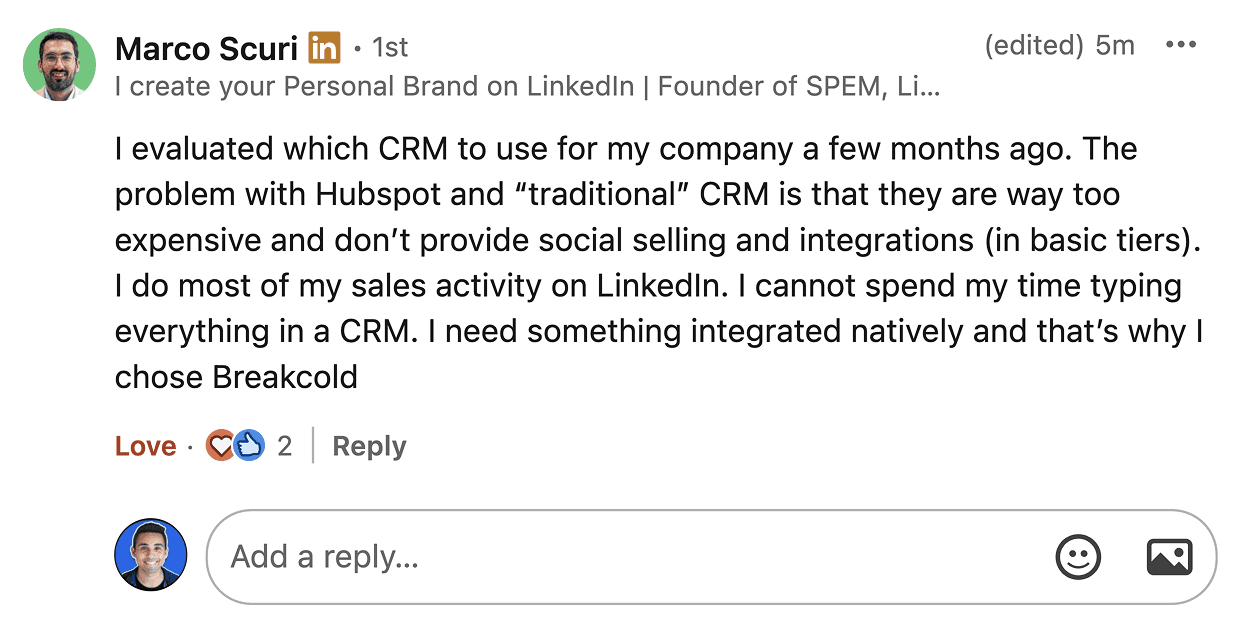
HubSpot's strength is its marketing automation and contact database. For a full sales team using Telegram as a communication channel, you're essentially building a workaround on top of a platform that wasn't designed for it. The pricing doesn't help: HubSpot charges per seat at the Sales Hub level, and each integration (Telegram via Zapier, LinkedIn enrichment, enrichment tools) adds to the monthly cost quickly.
HubSpot does have an MCP server for its API, so you can technically connect an AI agent to HubSpot records, but because Telegram conversations aren't natively stored in HubSpot, your AI agent still can't read them. You get AI over records; you don't get AI over the actual deal conversations. For teams that use Claude or ChatGPT to manage their pipeline, this gap matters.
4. Salesforce: Enterprise Add-On, Not Built for SMBs
Salesforce has a product called Salesforce Messaging that can handle Telegram in an enterprise support context: think customer service at scale, ticketing, and routing. It's not built for a B2B sales rep managing 50 active Telegram conversations with prospects.
Even if you did configure Salesforce and Telegram for a sales workflow, you're looking at significant admin work, a Salesforce admin license, and a bill that starts well above what most SMB sales teams want to pay. Salesforce targets large enterprises; Breakcold targets teams of 5 to 30. They're solving different problems at different price points.
For AI-powered sales CRM use cases at the SMB level, Salesforce's complexity and cost make it hard to recommend. It's powerful if you already live in the Salesforce ecosystem. If you're starting fresh or switching, the overhead isn't worth it for Telegram sales workflows.
5. Folk CRM: No Telegram Integration
Folk CRM, the French-built relationship management tool, doesn't offer Telegram integration as of 2026. Folk positions itself as a LinkedIn-friendly CRM with good contact enrichment and a clean UI, but its channel coverage is limited to email and LinkedIn. There's no native Telegram or WhatsApp support.
Folk competes more in the solopreneur and small team space than in the sales-rep-at-scale market. If Telegram is a critical channel for your deals, Folk isn't on the shortlist. Note also that even Folk's LinkedIn integration requires manual syncing, conversations don't auto-sync the way they do in Breakcold. For a CRM that auto-syncs messages across channels, Folk falls short across the board.
Why the AI angle changes everything for Telegram
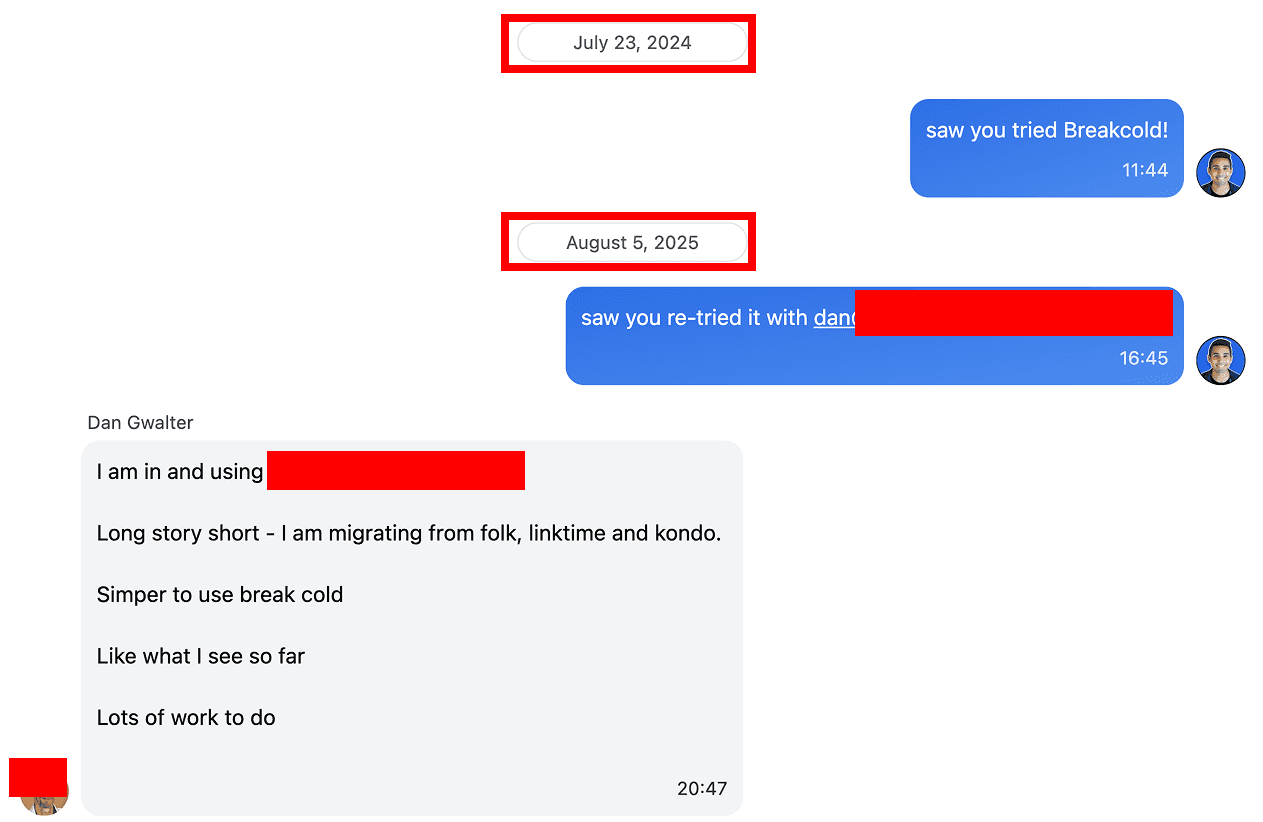
The reason native Telegram integration has become more important in 2026 is AI. When your CRM stores Telegram conversations natively, an AI agent connected via MCP can actually read those threads. That changes what AI can do for your sales pipeline.
With Breakcold's MCP (which exposes 55 tools including full conversation history across all channels), you can ask Claude questions like:
"What did this prospect say on Telegram last week about pricing?"
"Which of my active deals have gone cold on Telegram but not on email?"
"Based on our Telegram and LinkedIn conversations, is this deal ready for a proposal?"
A CRM that receives Telegram as a Zapier webhook note can't answer any of those questions. A CRM that stores the full thread can answer all of them. This is the gap between AI features in a CRM (AI that summarizes your records) and a CRM built for AI (one where the AI can act on your actual conversations).
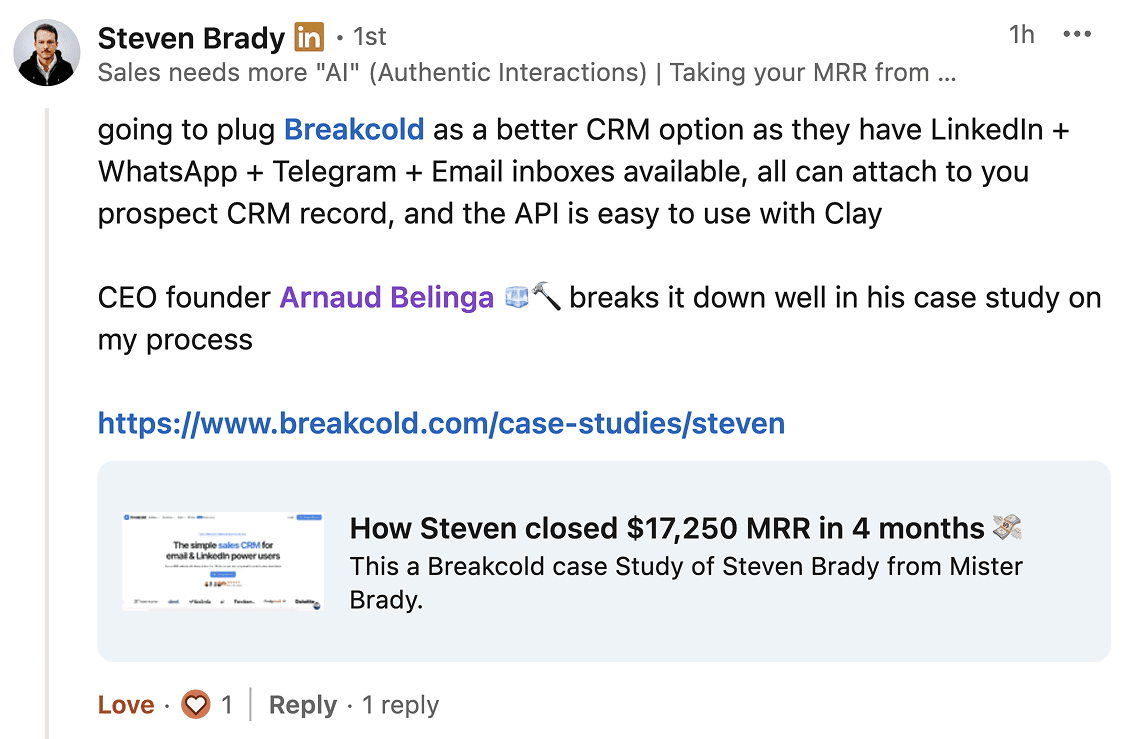
The case for a social CRM that unifies all your channels isn't just about convenience. It's about giving your AI tools the data they need to actually help you close deals. A fragmented stack where Telegram lives in a Zapier workflow means your AI is always working with incomplete information.
How to connect Telegram to Breakcold in 3 steps
Setting up Telegram in Breakcold takes about two minutes. There's no Zapier workflow to build, no webhook to configure, no developer required.
Go to Integrations in your Breakcold workspace. Under "Connected Accounts," find the Telegram section. Click "Connect Telegram."
Scan the QR code with your Telegram mobile app. Breakcold uses the official Telegram API. You authenticate by scanning: the same way you log into Telegram Web. Your account stays yours; Breakcold just gets permission to read and sync conversations.
Select which chats to sync. You choose which Telegram conversations get linked to your CRM. Individual DMs or group chats: both work. Once linked, messages auto-sync to the relevant contact or deal record.
After setup, every new Telegram message from a synced contact lands in your Breakcold inbox alongside your emails, LinkedIn DMs, and WhatsApp messages. You reply once, from one place. The conversation history is always attached to the right record.
For teams managing multiple Telegram accounts or client workspaces, Breakcold's workspace and permissions system lets you separate channels by team member or client account without mixing threads.
Pricing: what Telegram integration actually costs per CRM
One of the reasons teams end up with Zapier-glued Telegram setups is that CRMs charge extra for social channel integrations. Here's the honest comparison:
Breakcold: $99/mo baseline, 1 seat included. Additional seats at $10/mo each. Telegram, WhatsApp, LinkedIn, email and calls all included. No add-ons needed. A team of 5 pays $139/mo ($99 + 4 x $10) for the full multichannel stack.
Pipedrive + Zapier: Pipedrive plans start around $14/mo/seat but you'll need the higher tiers for API access. Add Zapier ($20 to $50/mo depending on task volume) and you're already at $100+ before you've built the Telegram workflow.
HubSpot Sales Hub: Starts at around $100/seat/mo on the Starter plan. Telegram integration requires Zapier or a custom integration on top. LinkedIn and WhatsApp are not native either.
Salesforce: Entry-level starts around $25/seat/mo but enterprise messaging and Telegram support are only available on much higher tiers. Budget at least $75 to $300/seat/mo for the tiers where this becomes viable.
The math is straightforward: if Telegram (and LinkedIn, and WhatsApp) are part of your sales stack, a CRM that bundles them natively will cost less than stitching together separate tools, and it will work better.
Conclusion: Telegram is a sales channel, treat it like one
Telegram isn't going away. For a growing share of B2B deals, especially in international markets, it's the primary communication channel. A CRM that can't read, sync, and act on Telegram conversations is a CRM that's leaving half your pipeline in a blind spot.
Of the five options covered here, only Breakcold offers a native Telegram integration that covers the full stack: auto-sync, inbox reply, contact import, and AI-readable threads via MCP. The other four range from "requires a Zapier workflow" to "not available at all."
If you want to see how Breakcold handles Telegram alongside the rest of your channels, start the 14-day free trial. No credit card required, and Telegram connects in the first two minutes.
Last updated: May 2026. Breakcold is an AI-native sales CRM built for teams of 5 to 30 people. Native integrations include Gmail, Outlook, LinkedIn, WhatsApp, Telegram, Zoom, Google Meet and phone calls, all included in the base $99/mo plan.
Frequently asked questions

Written by
Arnaud Belinga · Co-Founder & CEO at Breakcold
Arnaud is the Co-Founder & CEO of Breakcold, the AI Native CRM for sales teams of 5 to 30+ people.